
A B2B lead generation case study: six months in
Oct 15, 2026
First published July 2026 at three months. Updated October 2026 at six months.
I launched The AI Edit in April 2026. This B2B lead generation case study shows what the first six months of lead gen activity produced: 79 leads and 46 sales.
- Eight of those sales were low ticket, under £50.
- Nine were high ticket, worth four or five figures.
Not everything went to plan. One offer didn’t land and had to be redesigned. Our search rankings disappeared and came back. Here’s the detail.
What counts as a lead in this B2B lead generation case study
For me, a lead is someone who has put their hand up and said they’re interested in what I’m selling.
Not a name and some demographics.
That’s why my numbers look low. Some people say they can generate 10,000 leads a month. What they typically mean is 10,000 sets of contact details. It’s a different definition for a different strategy. It’s not necessarily worse (although I haven’t seen it work in high value B2B products and services), and in some situations it works. It just isn’t what I’m measuring.
It’s also why I always report sales alongside leads. When more than half your leads become customers, you know you’re generating good leads.
Where the leads came from: LinkedIn, Substack, referral and network
Most of my leads come from four places: LinkedIn, Substack, referrals and my existing network.
Two came through the website via organic search.
I currently only have a small number of lead gen channels up and running properly. That’s deliberate. My whole approach to building a lead gen engine is to get one channel humming before moving on to the next.
And when you launch a brand new business, everything takes time to build momentum. Each of those channels is slowly building it.
Your first leads will tell you more than any business plan
As I went to market and started generating leads, I had to let the offering evolve.
This comes up all the time. It’s why I always insist the founder is heavily involved in generating the first leads. In the early stages, lead gen is also data gathering, and the data shapes the product.
The B2B Lead Accelerator is a good example. It started life as a cohort programme, and I began generating leads for it before the cohort even existed.
People were interested. Six of them joined the waitlist. Then I had to finish designing the cohort product, which took months.
Most of the people on the waitlist had been quite keen on the idea at the start. But as the launch date approached, they lost momentum.
I had a few conversations to establish what was going on: what had appealed about the offer at first, and what had stopped appealing. I discovered that what they wanted was lead gen coaching. The cohort-based programme was a clumsy way of delivering it.
I also realised I didn’t want to run a cohort. Coordinating the diaries of multiple cohort members was an admin struggle I was happy to avoid.
So after a few conversations, the product evolved into bespoke lead gen coaching. I think it’s a good offer. It relaunched in September and made its first sale immediately.
In the very early stages, your lead gen strategy is part of your product development strategy. You have to test, listen and evolve: what is catching your buyer’s eye? What is putting them off? Then you iterate. Scaling comes much later - once you know what works best.
Some lead gen channels take time, and some are volatile
Search is the clearest example of both.
We launched this site in April 2026. By July, we were starting to rank in the top 20 search results on Google for some of our core terms. Last week we fell out of the top ten for all of them. This week we’re back.
Take “B2B lead generation training”. In July we ranked 11th. Last week we weren’t in the top 20. Now we’re 6th.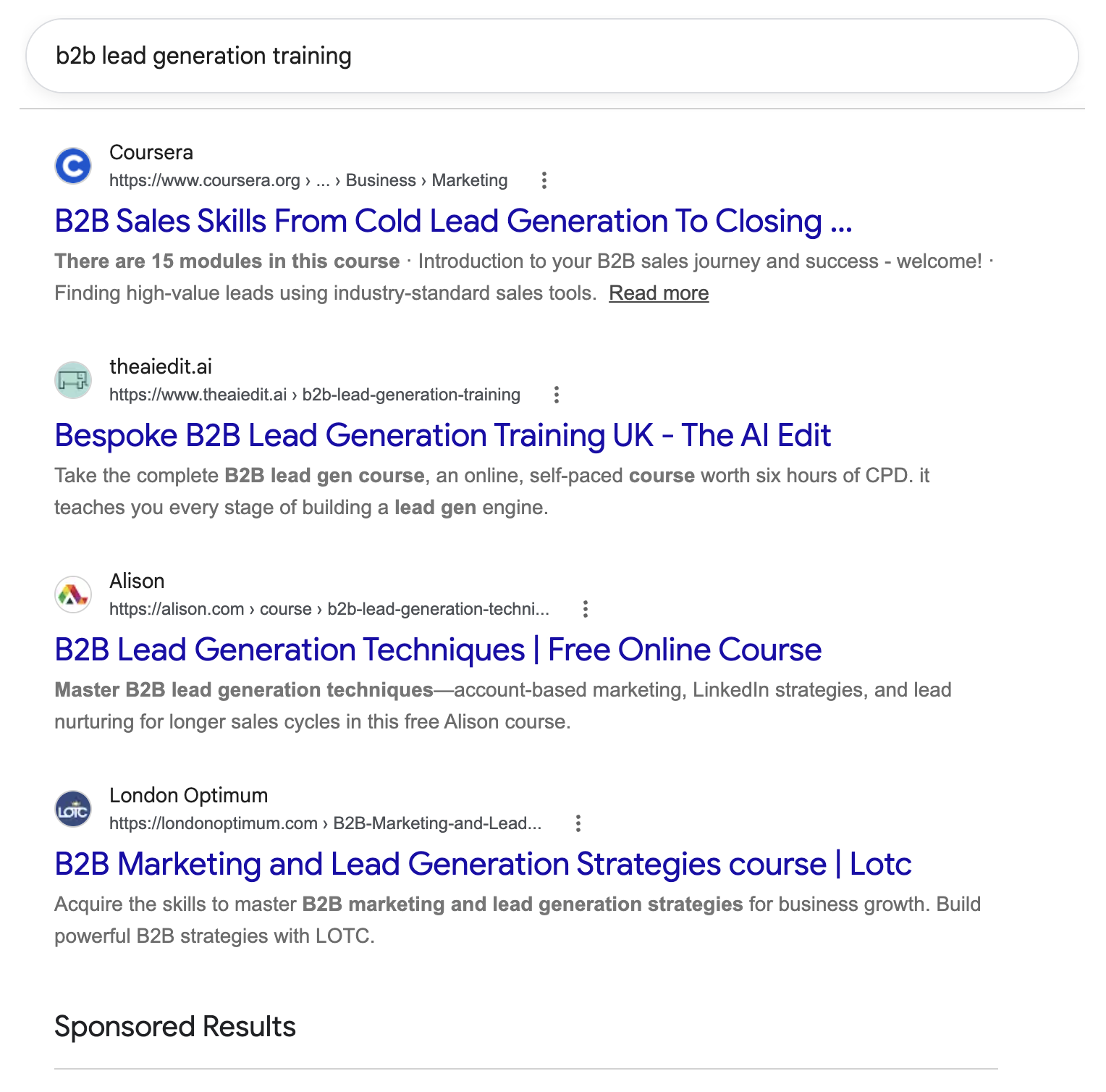
There’s been a Google algorithm update in that time. Our site is new and the numbers are small, but we are bringing in organic traffic, and we’re very early in the process.
AI search is moving more slowly. We’re only getting a handful of visits a week from AI chatbots, and no leads.
Where The AI Edit stands after six months
We’re still at the early stages. Still adapting the offer. Still building the brand. Making a small profit. Trying to refine our systems and processes.
For context, when I first published this case study at three months, in July, we’d had 49 leads and 21 sales (see the video version below). Two were under £50 and six were high ticket. Sales have more than doubled since.
There’s a long way to go. But it’s good progress.
If you want leads who have put their hand up, not lists of contact details, there are two ways to work with me: lead gen consulting, or 1:1 lead gen coaching.
By Heather Baker, founder of The AI Edit.